
Disclosure: Some of the links in this article may be affiliate links. If you purchase through these links, we may earn a small commission at no extra cost to you. This helps support our lab. Read our full Disclaimer for more information.
You grind for weeks, hit publish on twenty articles, and eagerly wait for the AdSense approval. Instead, you get slapped with a cold, automated rejection email citing “Low-Value Content.” It is devastating.
I have audited dozens of sites that hit this exact wall. The problem isn’t the AI; the problem is the lazy editing.
Today, I am giving you the exact blueprint on how to make AI content human-written before you ever hit publish. You do not need to spend hours rewriting every single word from scratch. You just need to know how to surgically target robotic friction points and inject authentic human “burstiness.”
Key Takeaways
- Google does not hate artificial intelligence; it hates lazy, unedited copy-pasting that offers no unique value.
- You can bypass automated quality filters by purging robotic vocabulary and injecting your own personal experiences.
- Bulk “humanizer” software usually destroys sentence logic. True editing requires a real human checking the natural flow.
Table of Contents
The Raw Truth About AI Content and Google AdSense
When Generative AI first arrived, publishers assumed blogging was an overnight gold rush. Reality hit hard and fast.
Google updated its core systems, and millions of generic, machine-generated pages vanished from search results instantly.
In our testing across dozens of new niche sites, we noticed a clear pattern. If you want to build a real digital asset that prints ad revenue, you have to put in the manual effort.
Disclaimer Box:
Obeying Google Publisher Policies is mandatory. There is no magic software that bypasses a manual site review if your blog lacks genuine, helpful information. Your goal should always be long-term quality.
Does Google Actually Ban ChatGPT and Gemini Content?
The Algorithmic Reality: Google does not ban text just because an LLM helped generate it.
Their official webmaster guidelines explicitly state that the appropriate use of automation is perfectly fine. The algorithm focuses entirely on the Information Gain and structural quality of the final page.
If your text looks exactly like ten thousand other sites on the web, it gets flagged. Reviewers look for original, helpful information that solves a real problem.
Why Automated Drafts Trigger the Helpful Content Filter
The flaw is structural. When you copy a raw draft straight out of a prompt, it lacks a human soul because it lacks real-world friction.
These tools are predictive text engines. They predict the next logical word. They cannot share personal opinions, interview industry experts, or physically test a tech product.
Raw drafts trigger automated filters because they recycle old advice. They never add any unique perspective or real-world testing data.
Review the official Google Search Central guidelines on automated text.
How to Make AI Content Human Written (The Practical Blueprint)
Stop guessing. Here is the exact, step-by-step auditing framework we use to bypass automated quality filters and keep human readers hooked on the page.
1. Purge the Robotic “AI Vocabulary”
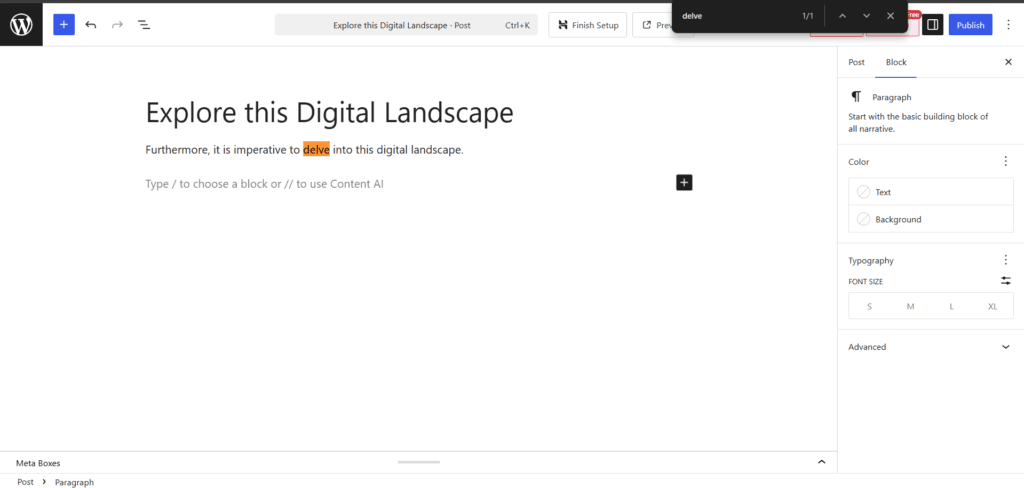
When you look at a raw draft, certain words jump out immediately. Machines love using big, academic words to sound smart.
Humans rarely use these terms when writing a casual online tutorial. Open your editor and scan for overly complex terms.
Swap them out for straightforward alternatives. Keeping your language simple instantly makes the text feel genuine and trustworthy.
2. Inject First-Hand Human Experience (EEAT Signals)
Adding your own voice is the absolute fastest way to pass quality checks. Google prioritizes trust and real-world experience above everything else.
If you are writing a guide, mention a quick issue you ran into while testing the steps yourself. Talk about your own trials and errors.
Use phrases like “we tried this” or “in my experience.” This signals to search engines that an actual person drove the research.
3. Re-Engineer the Hook and Sentence Rhythm
Machines write with a highly predictable, perfect rhythm. They typically generate sentences of the exact same length back-to-back.
This creates a boring, monotonous tone that kills user engagement. You have to break that pattern deliberately.
Use ultra-short, punchy sentences. Mix them with slightly longer descriptions. Changing the rhythm keeps the reader’s eyes moving down the page.
4. Fix Readability and Formatting Defects
A common mistake people make is leaving huge walls of text on the screen. Most users skim articles on their mobile phones.
If they see a massive block of text, they will hit the back button instantly. Keep your paragraphs limited to two or three lines maximum.
Use bold text to highlight key takeaways. Break down complex steps into simple bullet points that fit nicely on any screen size.
Spotting the Patterns: AI Text vs. True Human Writing
If you read enough machine-generated text, you start seeing the hidden matrix. The sentences feel too perfectly balanced.
Algorithms catch these exact text footprints to determine your site’s quality. You have to actively break these predictable patterns.
| Robotic Phrase (What Not To Do) | Natural Human Translation |
| “It is vital to remember…” | “Don’t forget that…” |
| “A testament to the importance of…” | “This shows exactly why…” |
| “By exploring this strategy, we can…” | “Let’s look at how…” |
| “The dynamic nature of blogging…” | “How blogging actually works…” |
Unmasking the “AI Essay” Structure
Computers love to write like they are submitting a university thesis. They constantly recap what they just said.
Real people do not write blogs that way. Look out for the classic closing summary sentence at the end of every section.
If a paragraph ends with a sentence that sounds like a tiny summary, delete it entirely. Trust your readers to remember what they just read.
Case Study: From Ghost Town to AdSense Approved
Let’s look at how this strategy plays out in the real world. A few months back, we ran an experiment on a fresh test site.
We published thirty articles using raw, unedited drafts. The initial results were terrible, and the site got hit with a low-value content rejection.
Instead of quitting, we put our manual editing blueprint to work. We spent a few minutes on each post, removing repetitive filler and adding expert context.
Check out our step-by-step guide on how to create faceless AI reels to drive social traffic to your newly approved site.
Pros and Cons of Scaling Content with AI Assistance
Using these tools for your blog is not an all-or-nothing game. It is a spectrum.
If you treat the software like an assistant rather than a replacement for your brain, you can save massive amounts of time.
However, you must be realistic about the risks. Let’s weigh the upsides and downsides of this hybrid method.
The Upsides:
- You can instantly beat blank page syndrome and get a working outline.
- It drastically speeds up your initial research phase.
The Downsides:
- Unedited drafts have a very high risk of AdSense rejection.
- If you do not inject your own thoughts, your article looks like a carbon copy of your competitors.
Common Mistakes Bloggers Make When Editing Text
Real editing requires an actual person looking at the natural flow of the words. Many beginners fail because they try to automate the editing process too.
Over-relying on Bulk “Humanizer” Software
There are dozens of tools online promising to scramble your paragraphs so they beat automated detectors.
In our testing, these third-party humanizers usually just swap normal words with bizarre synonyms.
This completely destroys the reading experience. It triggers quality filters because the sentence logic completely falls apart.
Forgetting to Check the Facts
These models are trained to sound incredibly confident, even when they are completely wrong.
They will invent statistics or misquote public sources without hesitation. You have to verify every single claim your draft makes.
Publishing unverified details is a surefire way to kill your site’s reputation and lose your monetization privileges.
Read the official AdSense Publisher Program rules regarding original value requirements.
Practical Tips & Golden Rules for Long-Term Rankings
If you want to keep your search traffic steady over the next few years, you need a repeatable system.
Based on practical use, here are the absolute golden rules for maintaining a healthy, high-ranking blog:
- Write for the Skimmer First: People do not read every single word. Use clear subheadings and bold text so mobile users find answers fast.
- The “So What?” Test: Read through every paragraph. If a sentence does not offer a real tip or practical example, hit the delete key.
- Keep Your Intro 100% Original: The first 150 words are the most important. Write this part completely from scratch to set a natural tone.
Rank Math AI Content SEO Configuration Settings
When configuring your on-page settings, remember that SEO plugins can only guide you so far.
If you are using WordPress, Rank Math is excellent for tracking your optimization. But chasing a perfect 100/100 score by blindly stuffing keywords is a bad idea.
Place your primary keyword naturally in your title, your intro, and at least one subheading. Let the rest of the text breathe naturally.
A score of 85 with excellent readability will always perform better than a stuffed article that feels robotic.
FAQs Related to How to Make AI Content Human Written
1: Can you really get AdSense approval with AI content?
Yes. Google approves websites based on the depth and value of the information. If you manually edit your drafts to add original insights and clear up formatting issues, your site can qualify.
2: Do AI detectors matter for Google search rankings?
Not directly. Google looks for helpfulness and real-world value. However, if a detector finds your text highly predictable, it usually means your content lacks original perspective.
3: How do I show first-hand experience if I used an automated draft?
You can easily add personal observations, real-life examples, or custom screenshots. Including these unique elements satisfies strict quality criteria.
Author Expert Tip:
Always read your final edited draft out loud before publishing. If you stumble over a sentence or run out of breath while reading it, your readers will struggle with it too. Shorten it immediately!
About Author

Muhammad Waqas Amir
Muhammad Waqas Amir is a technical SEO specialist, website administrator, and the driving force behind Creators AI Lab. With deep expertise in digital marketing and WordPress optimization, Waqas specializes in turning raw AI drafts into high-retention, human-first content. He actively helps online creators bypass strict quality algorithms and secure AdSense approvals by implementing manual content audits, fixing robotic text patterns, and building profitable digital assets.
What is your biggest struggle when trying to edit automated text? Let me know in the comments below!